
Abdominal pain is something most people experience from time to time. It might be discomfort after a heavy meal, cramps during a stomach upset or bloating that eventually settles on its own.
But what happens when the pain doesn't go away, keeps coming back or feels different from what you're used to?
It isn't always easy to tell whether abdominal pain is something you can wait out or a sign that something more serious is happening. While the intensity of the pain can offer some clues, its location, duration and accompanying symptoms are just as important.
This article explores the possible causes of abdominal pain, the warning signs to watch for and when it is time to seek medical attention.
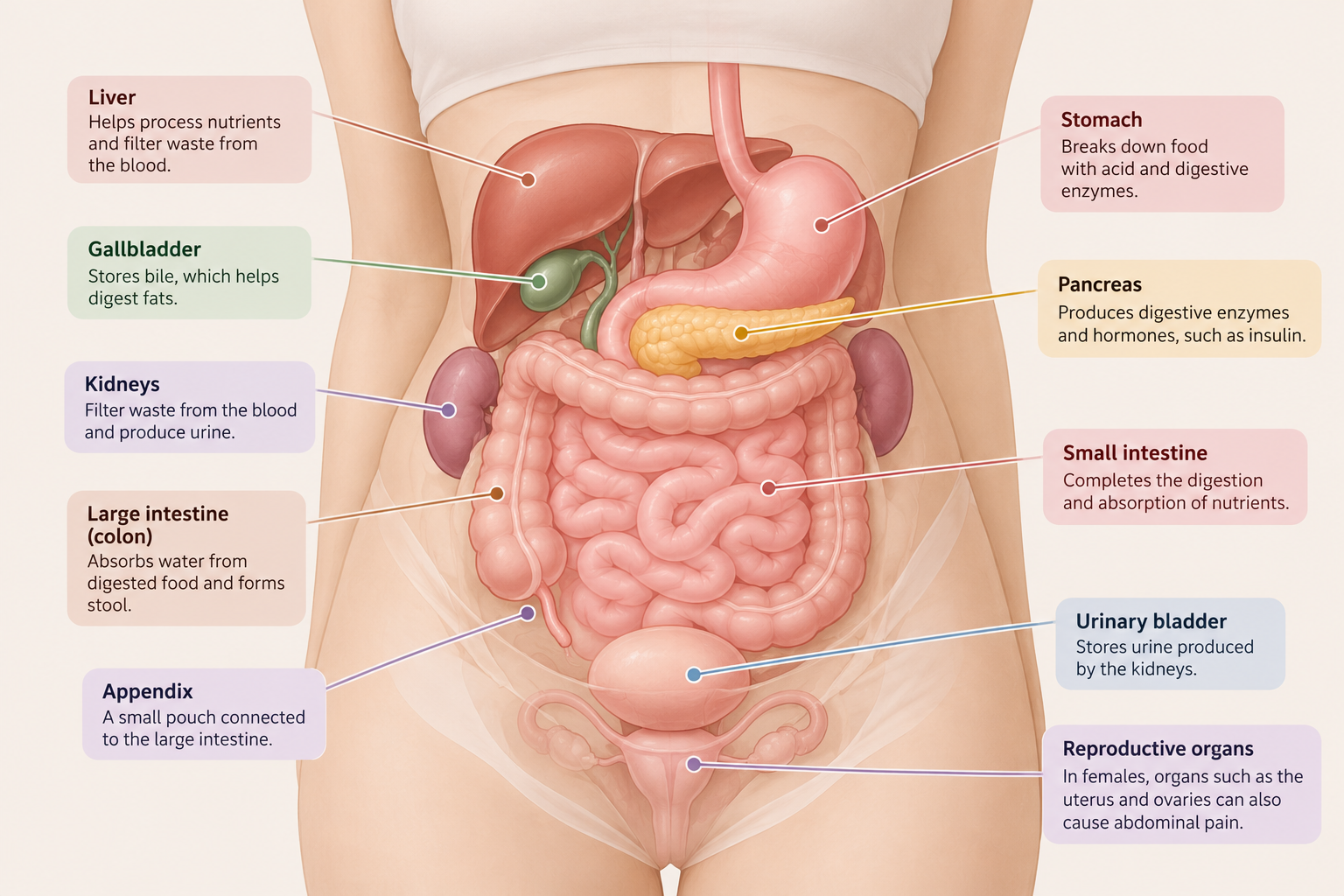
Abdominal pain refers to discomfort felt anywhere between the lower chest and pelvis. Although we often call it a stomach ache, the pain doesn't necessarily come from the stomach itself.
Several organs occupy this area, including the intestines, appendix, liver, gallbladder and pancreas. Problems affecting the kidneys, urinary tract or reproductive organs can also cause abdominal discomfort. Occasionally, pain originating from the chest, including certain heart conditions, can be felt in the upper abdomen.
Abdominal pain doesn't always feel the same. It can range from a dull ache or intermittent cramps to a burning sensation, pressure or sharp, localised pain.
Not every stomach ache points to a serious medical problem. Everyday digestive issues are often responsible, especially when the discomfort is mild and settles within a short period.
Some common causes include:
Changes in how abdominal pain begins, progresses or affects your daily activities can provide important clues about whether medical attention is needed.
Pain that comes on suddenly and becomes intense should never be ignored. It can sometimes indicate an acute medical problem, such as a perforation in the digestive tract, bowel obstruction or severe inflammation of an abdominal organ.
This is especially concerning if your abdomen becomes extremely tender, you feel faint or the pain is so severe that you cannot find a comfortable position. Sudden, severe abdominal pain requires emergency medical assessment.
A stomach ache that doesn't improve, keeps returning or becomes progressively more painful deserves attention, even if it started as mild discomfort.
Appendicitis, for example, can begin with a vague ache around the belly button before the pain shifts towards the lower right abdomen and becomes more intense. However, not everyone experiences this typical pattern.
Sometimes, it is the symptoms accompanying abdominal pain that provide the clearest warning.
Fever, repeated vomiting, yellowing of the skin or eyes (jaundice), blood in the stool and noticeable abdominal swelling can all indicate a problem that needs medical assessment.
More serious warning signs include vomiting blood, fainting, a rigid or extremely tender abdomen, or significant abdominal swelling with vomiting and an inability to pass stool or gas. These symptoms require emergency care.
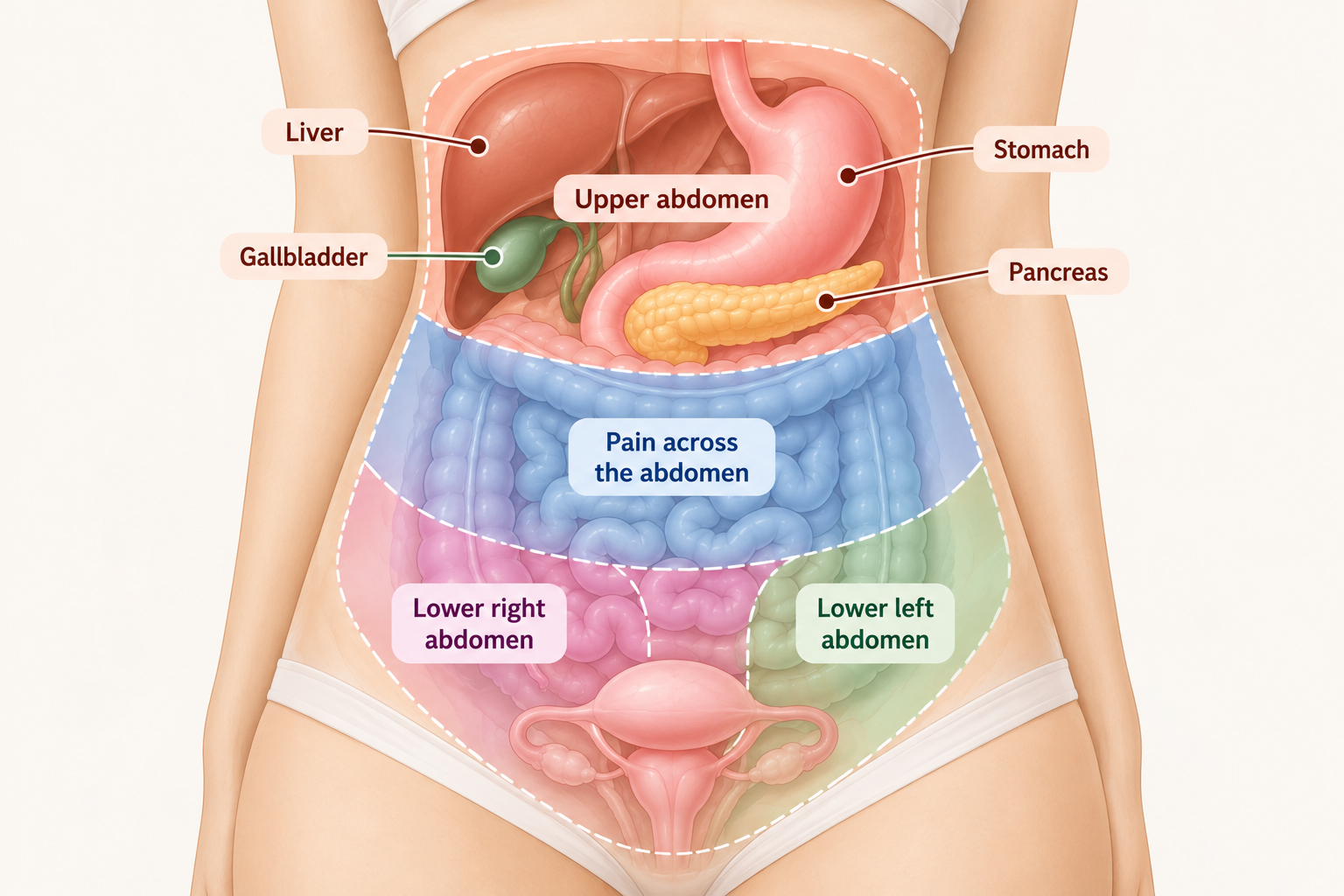
Where you feel abdominal pain can offer clues about which organs might be affected.
| Upper abdominal pain | Can be associated with indigestion, peptic ulcers, gallbladder disease or pancreatitis. Gallbladder pain typically occurs in the upper right abdomen, while pancreatitis often causes pain in the upper centre that spreads towards the back. |
| Lower right abdominal pain | Appendicitis is one possible cause, although intestinal problems, urinary conditions and certain reproductive conditions can also cause discomfort in this area. |
| Lower left abdominal pain | Often associated with bowel-related conditions, including constipation and diverticulitis. The latter involves inflammation of small pouches that develop in the bowel wall. |
| Pain across the abdomen | Widespread discomfort can occur with trapped gas or gastroenteritis. More serious conditions, such as bowel obstruction or peritonitis (inflammation of the abdominal lining), can also cause pain across a larger area. |
To identify the cause of abdominal pain, Dr Aaron Poh will ask about your symptoms, medical history and where the discomfort occurs. A physical examination can help identify areas of tenderness, swelling or other abnormalities.
Depending on the findings, further investigations may include:
Not everyone requires extensive testing. Your doctor will recommend investigations based on your symptoms, examination findings and suspected cause.
While mild abdominal discomfort often settles on its own, certain symptoms should not be ignored.
Seek emergency medical attention if you experience:
In Singapore, visit the nearest emergency department or call 995 if emergency ambulance assistance is needed.
For less urgent symptoms, arrange a medical consultation if your abdominal pain keeps returning, persists without a clear cause or interferes with daily activities. Changes in bowel habits, unexplained weight loss or ongoing digestive discomfort also deserve attention.
Most abdominal pain is temporary and does not indicate a serious medical problem. However, persistent, recurring or worsening discomfort deserves attention, even when the pain is relatively mild.
Dr Aaron Poh colorectal specialist dedicated to diagnosing and managing a range of gastrointestinal and abdominal conditions. If you are experiencing persistent or unexplained abdominal pain, schedule a consultation with us for a detailed assessment and personalised treatment plan.


Copyright © Alpine Surgical Practice | Terms & Conditions


