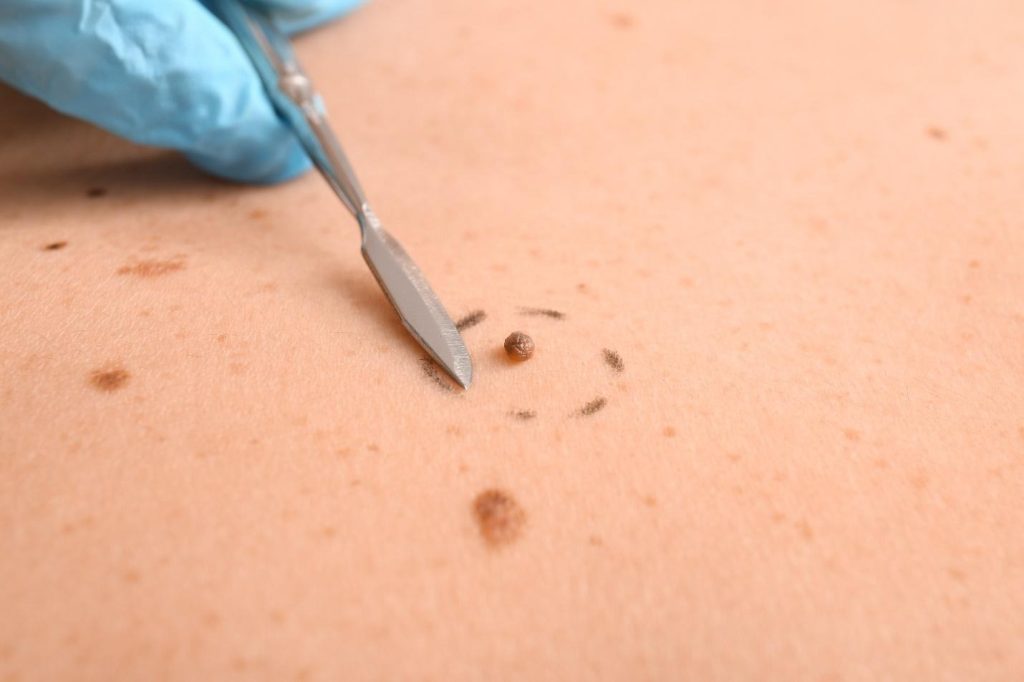
Benign skin lesion excision is a minor surgical procedure used to remove non-cancerous skin growths such as cysts, lipomas, moles and skin tags. While many benign lesions do not require treatment, excision may be recommended when they become painful, recurrent, irritated or cosmetically bothersome.
Excision of benign skin lesions is a minor surgical procedure used to remove abnormal growths from the skin or underlying tissue. The lesion is carefully cut out together with a small margin of surrounding tissue to ensure complete removal.
This technique is commonly used when a lesion is larger, deeper or prone to recurrence with simpler treatments. In many cases, the removed tissue can also be sent for laboratory analysis to confirm the diagnosis.
Performed under local anaesthesia, excision of benign skin lesions can often be completed as a day procedure
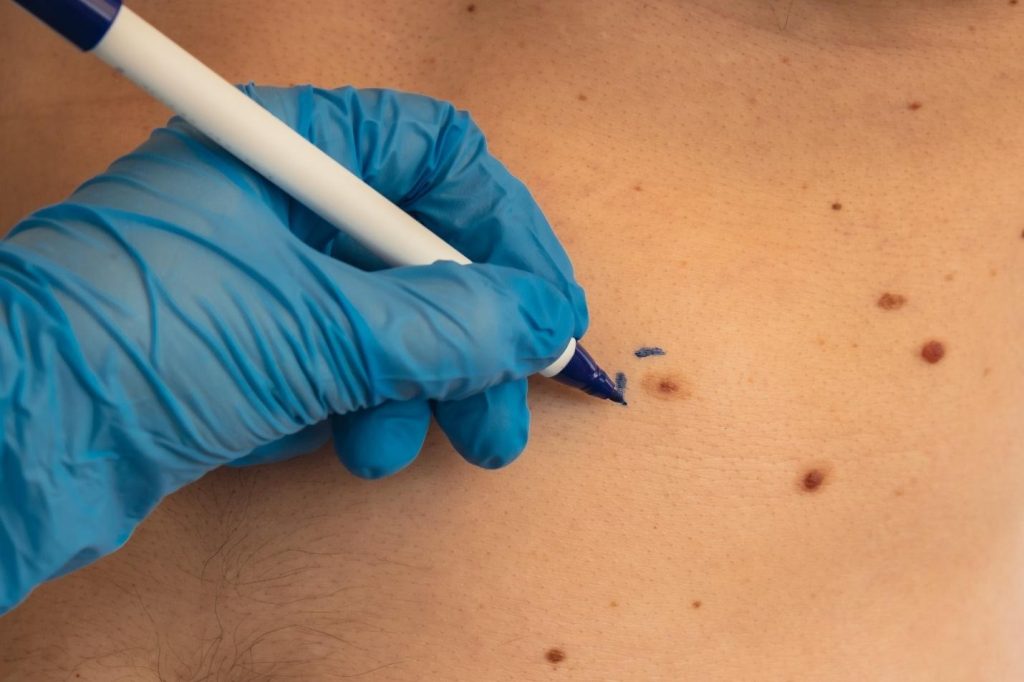
Excision works by surgically removing the entire lesion along with a small margin of surrounding tissue, reducing the chance that any abnormal cells are left behind. The wound is typically closed with stitches, allowing the skin to heal naturally over the following days to weeks. If there's any uncertainty about the nature of the lesion, the removed tissue can also be sent for laboratory analysis to confirm it is benign.
Several types of benign skin lesions may be considered for excision, particularly when they grow larger, become symptomatic or repeatedly recur.
If a cyst becomes infected, it may be treated with abscess drainage instead of excision.
Excision of benign skin lesions is usually performed as a minor surgical procedure, and most individuals can return home shortly afterwards.
Before the excision, Dr Aaron Poh will assess the lesion carefully to confirm that removal is appropriate. This evaluation may include assessing the duration of the lesion, whether it has changed in size or appearance, and whether it causes discomfort or irritation.
The surrounding skin is then cleaned with an antiseptic solution to reduce the risk of infection, and local anaesthesia is administered to numb the treatment area so the procedure can be performed comfortably. Patients typically remain awake throughout, although the treated area will be fully numbed. Our doctor may also mark the area beforehand to guide the excision and ensure precise removal.
Once the area is numb, the lesion is removed using sterile surgical instruments. The size of the incision and the amount of tissue removed depend on the lesion's type, size and location, with larger or deeper lesions generally requiring a slightly wider excision than smaller ones.
The procedure is generally brief, although duration can vary depending on the complexity of the lesion being removed.
Following the excision, the treated area is covered with a sterile dressing to protect the wound while healing begins. Mild tenderness or swelling around the site is common in the first few days and usually improves gradually.
Recovery after excision of benign skin lesions is generally straightforward, and most patients return to daily activities shortly afterwards, although strenuous activity or friction over the treated area may need to be avoided temporarily.
If stitches are placed, a follow-up appointment may be arranged to review the wound and remove the sutures when appropriate. Our doctor will also provide instructions on wound care to support smooth healing and minimise scarring.
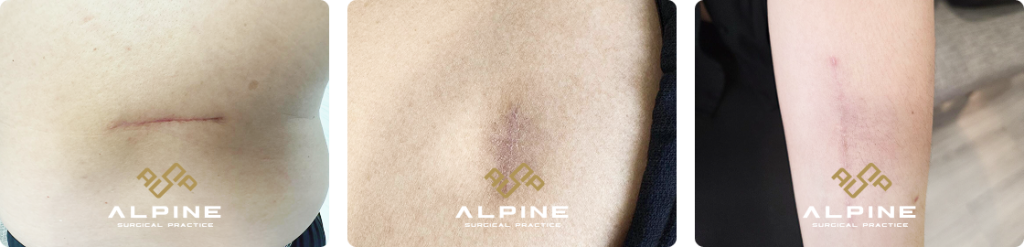
Most patients experience good outcomes after excision, particularly when the lesion is completely removed. Once excised, the abnormal tissue is permanently removed. Any associated symptoms, such as irritation or discomfort, typically resolve as the area heals.
To ensure the treatment area heals optimally, our doctor may advise:
Most benign skin lesions do not require treatment and can remain harmless for many years. However, treatment may be appropriate when a lesion begins to cause symptoms, changes in appearance or interferes with daily comfort. Evaluating these changes early allows our doctor to determine whether excision is appropriate.
Some situations in which removal may be considered include:
| Lesions that change in appearance | Changes in a skin lesion may indicate irritation, infection or, in rare cases, abnormal cell changes. Signs that warrant medical evaluation include: -- Rapid growth or enlargement -- Changes in colour or uneven pigmentation -- Irregular borders or changes in shape -- Thickening or raised surface changes |
| Lesions that cause physical discomfort | Some benign growths may become painful or irritated depending on their size and location. Removal may be considered when lesions: -- Become tender or painful -- Repeatedly rub against clothing or skin folds -- Bleeds easily when touched or injured -- Become inflamed or infected Excision can relieve discomfort and prevent repeated irritation. |
| Lesions that continue to grow | Certain benign lesions, such as cysts or lipomas, may slowly enlarge over time. While they remain non-cancerous, larger growths may eventually cause pressure, visible swelling or cosmetic concern. Removing these lesions earlier may make the procedure simpler and minimise potential complications. |
| Lesions located in sensitive areas | Lesions that develop in areas exposed to frequent friction or pressure may persistently irritate. This may include regions such as: -- The groin -- Under the arms -- Along the waistband or clothing lines -- Around the anal or perianal region Removal in these areas can help prevent repeated inflammation or discomfort. |
| Lesions that cause medico-cosmetic concerns | Although benign lesions are medically harmless, some individuals choose removal when the growth affects their confidence or appearance. Excision allows the lesion to be removed while preserving surrounding healthy skin. |
While most excision procedures heal without complications, it is important to monitor the treated area during recovery. Seeking medical attention promptly can help ensure that any concerns are addressed early.
You should consult our doctor if you experience:
Benign skin lesions such as cysts, lipomas, moles and skin tags are common and often harmless. However, removal may be considered when a lesion becomes painful, recurrent, irritated, continues to grow or causes cosmetic concerns. Excision allows the lesion to be completely removed while also providing the option for laboratory analysis when clinically appropriate.
Dr Aaron Poh provides assessment and surgical removal of benign skin lesions in Singapore, including cysts, lipomas, moles and skin tags. If you have a skin lesion that is changing in appearance, causing discomfort or affecting your daily activities, schedule a consultation with us for a personalised evaluation and treatment plan.
Benign skin lesion excision is usually performed under local anaesthesia, which numbs the treatment area. Most patients feel little to no pain during the procedure. Mild soreness or tenderness may occur after the anaesthesia wears off, but this typically improves within a few days and can usually be managed with simple pain relief if needed.
Not always. Smaller lesions may heal naturally without stitches, while larger excisions are usually closed with absorbable or removable sutures to support proper healing.
Most patients can resume normal daily activities within a day or two after the procedure, particularly for smaller lesions. Larger excisions or wounds located in areas exposed to movement or friction may require a slightly longer recovery period.
Healing time depends on the size and location of the excision. Small lesions may heal within 1 to 2 weeks, while larger excisions or those requiring stitches may take several weeks to fully heal. Following wound care instructions and attending follow-up appointments helps support a smooth recovery.
Because excision involves making a small incision in the skin, a scar will form as part of the natural healing process. However, careful surgical technique is used to minimise scarring and most scars gradually fade and become less noticeable over time. Post-operative scar preventative therapies will also be given
Excision removes the lesion entirely. While benign lesions themselves are not cancerous, removing suspicious or changing lesions allows the tissue to be examined in the laboratory to rule out malignancy.
Yes, many patients choose excision to remove lesions that are noticeable, unsightly or repeatedly irritated by clothing or daily activities.
The most suitable treatment depends on the type, size and location of the lesion. Excision removes the entire lesion and allows the tissue to be examined if necessary, which can help confirm the diagnosis. Laser treatments may be appropriate for some superficial lesions, but may not remove deeper tissue completely. Our doctor can recommend the most appropriate option after evaluating the lesion.
The procedure is usually quick and often completed within 15 to 45 minutes, depending on the size, depth and location of the lesion. Smaller lesions may be removed in a short clinic visit, while larger or more complex excisions may take slightly longer.
Most benign skin lesions do not grow back once they have been completely removed. However, new lesions can sometimes develop in other areas of the skin over time, especially in individuals who are prone to conditions such as cysts or skin tags.
Coverage depends on the individual's insurance policy and the medical indication for removal. Lesions removed because of symptoms, recurrent infection, discomfort or diagnostic concerns may be eligible for coverage under some plans. Patients are advised to check directly with their insurer regarding eligibility and claim requirements.


Copyright © Alpine Surgical Practice | Terms & Conditions


'/%3E%3C/svg%3E)


