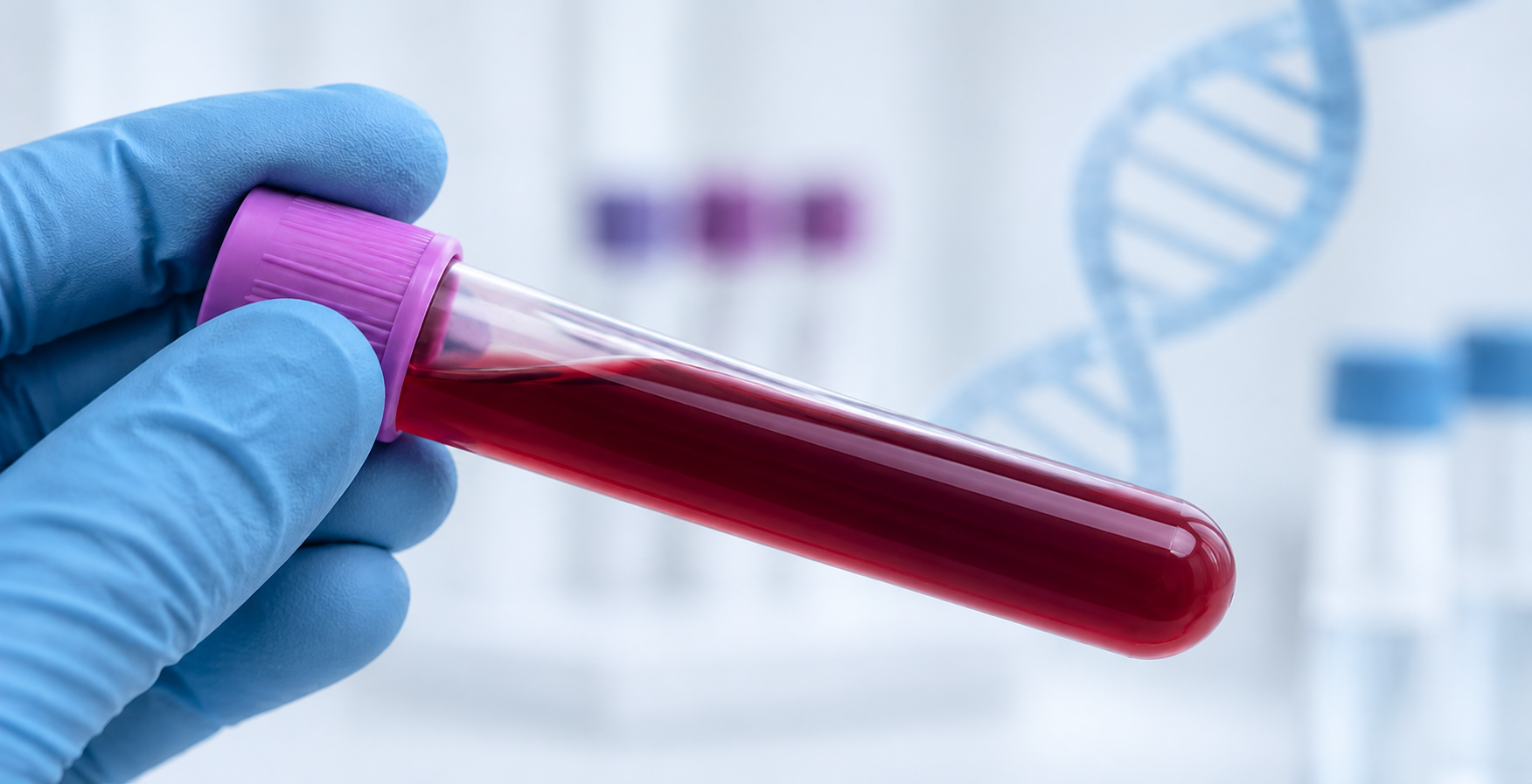
Cancer screening plays an important role in early detection, but not everyone feels ready to undergo procedures such as a colonoscopy or endoscopy. For those looking to explore less invasive screening options, blood-based circulating tumour DNA testing offers another approach.
Through a simple blood sample, these tests look for molecular signals associated with cancer from various organs. Unlike conventional screening methods that focus on a specific part of the body, blood-based tests can screen for signals associated with multiple cancer types at once.
Understanding what blood-based tumour DNA testing can and cannot detect is essential when deciding how it fits into your overall cancer screening plan.
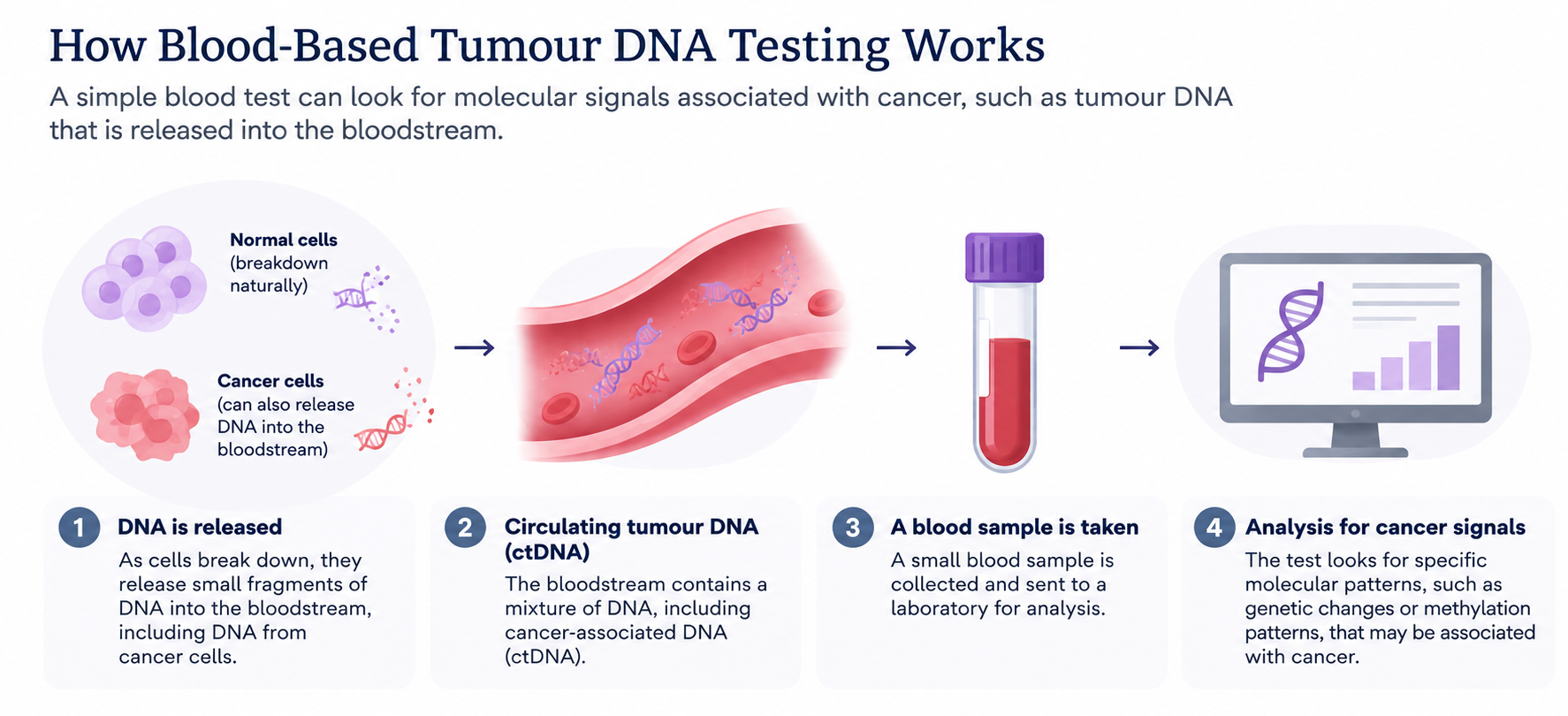
Blood-based tumour DNA testing is a form of liquid biopsy that looks for circulating DNA fragments associated with cancer in a blood sample.
As cells naturally break down, they release small fragments of DNA into the bloodstream. These are known as cell-free DNA (cfDNA). Cancer cells can also release DNA, referred to as circulating tumour DNA (ctDNA), which may carry genetic or molecular changes associated with cancer.
Blood-based cancer screening tests analyse these circulating signals to look for patterns that could indicate the presence of cancer. Depending on the technology used, they can examine DNA mutations, methylation patterns or other molecular characteristics.
Some tests can screen for signals associated with multiple cancer types from a single blood sample, even before symptoms appear. However, detecting a cancer-associated signal does not confirm a diagnosis, and further investigations are needed to determine whether cancer is present.
For patients, blood-based tumour DNA testing offers a less invasive way to look for cancer-associated signals, including those that may be present before symptoms develop.
Its potential benefits include:
Both blood-based tumour DNA testing and conventional tumour marker tests can provide information associated with cancer, but they examine different biological signals and serve different purposes.
Traditional tumour marker tests, such as CEA, CA 19-9 and CA-125, measure substances in the blood that can be elevated in people with certain cancers. However, these markers are not specific to cancer. Levels can also rise due to benign conditions, inflammation or other non-cancerous changes. Some patients with cancer may also have normal tumour marker levels.
Blood-based tumour DNA testing takes a different approach by analysing genetic and molecular characteristics associated with cancer. This offers the potential to identify cancer-associated signals more specifically, although performance varies between tests and cancer types.
| Blood-Based Tumour DNA Testing | Conventional Tumour Marker Tests | |
| What it detects | Cancer-associated DNA and other molecular signals | Proteins or other substances associated with certain cancers |
| Examples | Various laboratories | CEA, CA 19-9, CA-125, AFP |
| Cancer coverage | Certain tests screen for signals associated with multiple cancer types | Individual markers are associated with particular cancers, although some overlap |
| Early detection | May detect cancer-associated signals before symptoms, with varying sensitivity in early-stage disease | Generally have limited reliability for detecting early-stage cancer |
| Specificity | Some tests demonstrate high specificity in clinical studies, depending on the platform and population | Levels can be elevated by non-cancerous conditions |
| Clinical use | Emerging approach to multi-cancer screening | Commonly used to support diagnosis, assess treatment response or monitor recurrence in selected cancers |
Blood-based tumour DNA testing offers potential advantages over conventional tumour markers such as CEA and CA 19-9, which have limited reliability for detecting gastrointestinal cancers at an early stage.
Rather than measuring proteins that can also be elevated by non-cancerous conditions, tumour DNA tests analyse molecular signals associated with cancer. Some have demonstrated high specificity in clinical studies and can screen for signals linked to colorectal, stomach, pancreatic and other gastrointestinal cancers.
However, this does not mean they are more accurate in every situation. Detection rates vary by cancer type and stage, and a negative result cannot rule out cancer. Established screening methods, including colonoscopy, remain important and first line investigation.
Blood-based tumour DNA tests use different technologies to identify molecular signals associated with cancer. At Alpine Surgical Practice, the available options from different laboratories are available.
Although both involve a simple blood draw and can screen for signals associated with multiple cancer types, they differ in the molecular features they analyse and the cancers they cover.
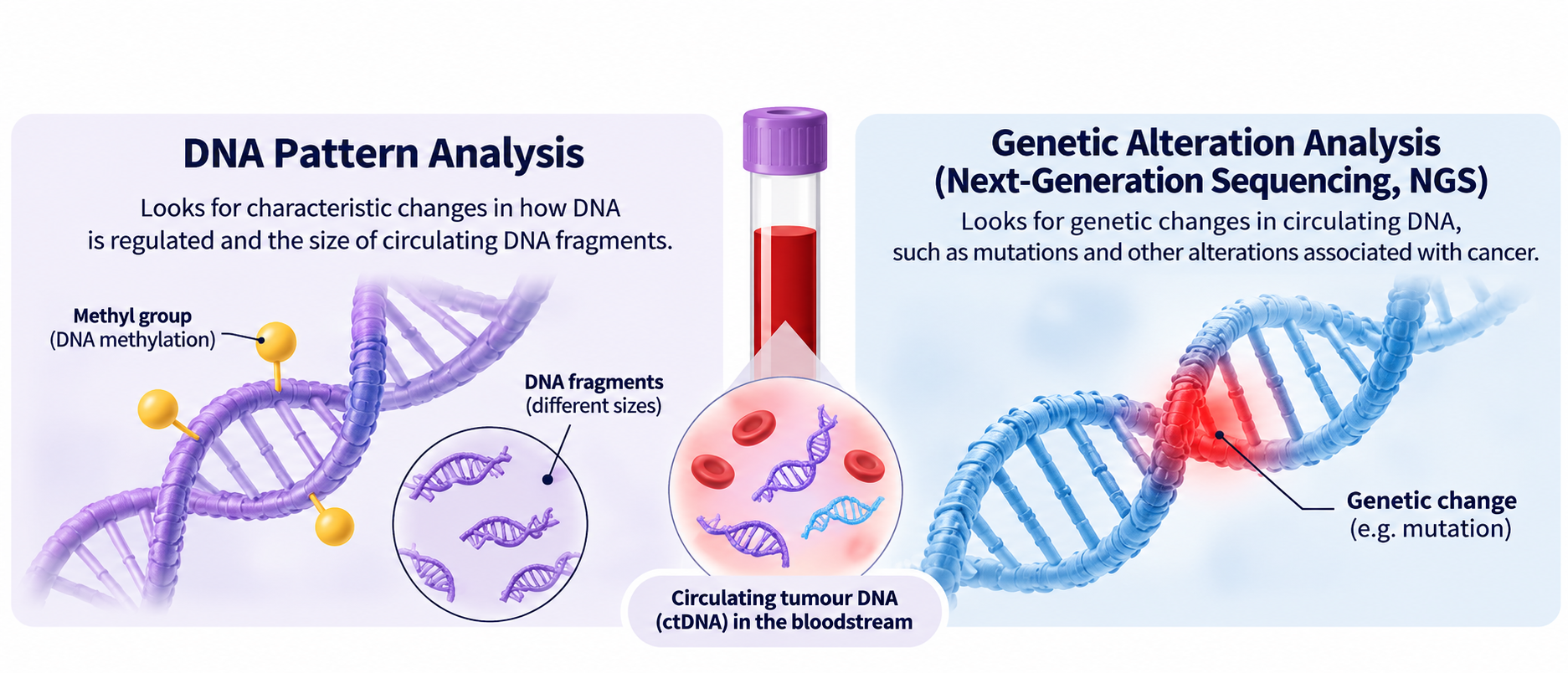
Not all blood-based tumour DNA tests work in the same way. Some look for changes in how DNA behaves, while others examine genetic alterations associated with cancer.
These different approaches can provide information about cancer-associated signals in the bloodstream, although the types of cancer they screen for and their detection capabilities vary.
Cancer cells can release DNA fragments into the bloodstream that have different characteristics from DNA released by healthy cells.
Some blood-based tests examine these differences, including changes in DNA methylation and the size of DNA fragments. By identifying patterns associated with cancer, they can screen for signals linked to several cancer types and, in some cases, suggest where these signals originated.
Other tests examine circulating DNA for genetic mutations and alterations associated with cancer. They use a laboratory technique called next-generation sequencing (NGS) to analyse multiple genetic changes from a single blood sample.
Depending on the test, this approach can identify signals associated with different cancer types.
Neither approach is necessarily more accurate than the other. Their usefulness depends on the cancers being screened for, the stage of disease and the specific testing technology used.
Blood-based tumour DNA testing is primarily intended for adults without symptoms who are interested in exploring additional cancer screening options.
It may be worth discussing with your doctor if you:
If you are experiencing symptoms such as blood in your stool, unexplained weight loss, persistent abdominal pain or changes in bowel habits, a screening blood test should not be your first or only investigation.
These symptoms require medical assessment, and your doctor may recommend more targeted examinations, such as a colonoscopy, gastroscopy or imaging scan, depending on the suspected cause.
Similarly, individuals with a strong family history of certain cancers may require a more specific screening programme rather than relying on multi-cancer blood testing alone.
Blood-based tumour DNA testing is a straightforward procedure that requires only a blood sample. Unlike colonoscopy or gastroscopy, it does not involve sedation, bowel preparation or inserting a scope into the body.
The process generally involves three steps:
No. While blood-based tumour DNA testing offers a less invasive way to look for cancer-associated signals, it cannot replace a colonoscopy for colorectal cancer screening. On a similar note, established and science-backed screening methods such as a mammogram, Pap smear and colonoscopy remain the gold standard for screening
A colonoscopy allows the doctor to examine the colon directly, identify abnormalities and remove certain precancerous polyps before they develop into cancer. Blood-based tumour DNA tests generally cannot reliably detect these precancerous changes.
If you are hesitant about undergoing a colonoscopy, you can discuss blood-based testing and other screening options with Dr Aaron Poh. However, a negative blood test should not be used as a reason to delay a recommended colonoscopy.
If you are considering blood-based tumour DNA testing but are unsure whether it is suitable for you, a consultation can help you better understand your cancer screening options.
At Alpine Surgical Practice, Dr Aaron Poh can assess your personal and family medical history, discuss the differences between the various tests, and advise how these tests may fit into your overall screening plan. Where appropriate, he can also recommend established investigations such as colonoscopy or gastroscopy.
Schedule a consultation with Dr Aaron Poh to discuss your cancer screening needs and available testing options.
Fasting is not typically required for tumour DNA analysis itself. However, preparation requirements can differ between the various tests particularly if other blood tests are performed at the same appointment. Our team will advise you on any necessary preparations beforehand.
Turnaround times depend on the test selected and the laboratory processing the sample. Unlike routine blood tests, tumour DNA testing involves specialised molecular analysis, which generally takes longer. Alpine Surgical Practice will advise you on the expected timeline when arranging your test.
There is currently no universally established screening interval for multi-cancer blood tests. The appropriate frequency depends on the test used, your age, individual risk factors and existing cancer screening programme. Dr Aaron Poh can discuss whether repeat testing is appropriate for you.
No. Multi-cancer tumour DNA screening looks for molecular signals associated with cancer rather than inherited genetic mutations that increase cancer risk.
If you have a strong family history of cancer, genetic counselling or hereditary cancer testing may be more appropriate for assessing your inherited risk.
Yes. Multi-cancer early detection tests are primarily intended for people without symptoms who are considering additional cancer screening.
However, if you have unexplained weight loss, blood in your stool, persistent abdominal pain or other concerning symptoms, you should undergo a medical assessment rather than rely on a screening blood test.
People with a recent history of cancer (usually within 5 years) are not suitable for blood-based tumour DNA testing due to cross-reactivity
Some blood-based tests can identify cancer-associated molecular signals before symptoms develop, including in certain early-stage cancers. However, detection is not guaranteed.
Very small tumours may release insufficient DNA into the bloodstream, making early-stage cancers harder to detect. Sensitivity varies between cancer types and testing technologies.
No. Routine blood tests generally measure substances such as blood cell counts, glucose, cholesterol or organ function markers.
Blood-based tumour DNA testing uses specialised molecular analysis to look for cancer-associated signals in circulating genetic material. It requires different laboratory techniques and serves a different clinical purpose.
You should discuss this with your treating doctor. Multi-cancer early detection tests are primarily intended for screening people without a known cancer diagnosis, and their suitability for cancer survivors depends on the test and clinical circumstances.
Patients who have previously undergone cancer treatment may require specific surveillance examinations or molecular tests to monitor recurrence instead.


Copyright © Alpine Surgical Practice | Terms & Conditions


