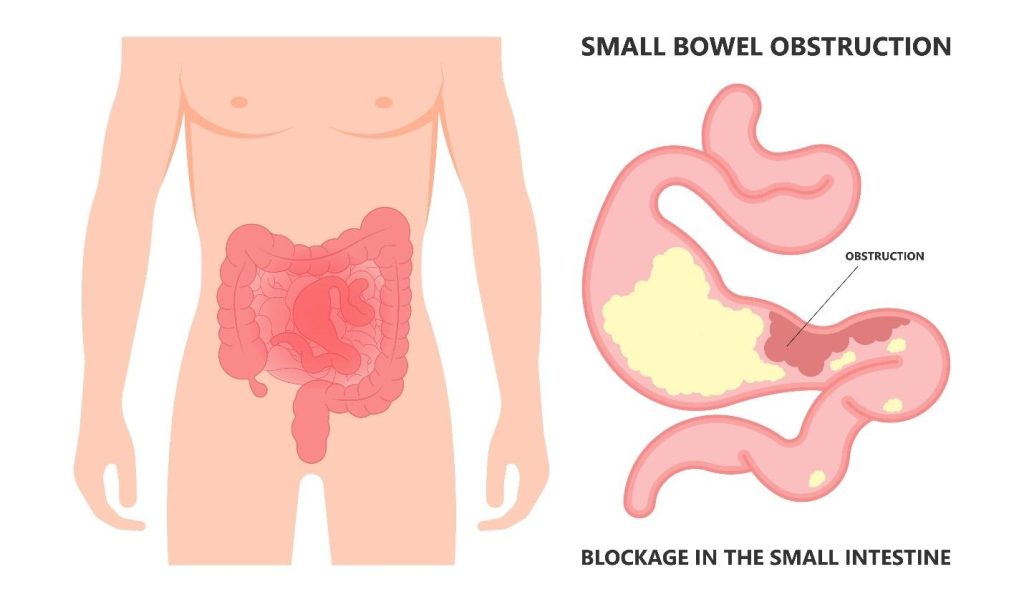
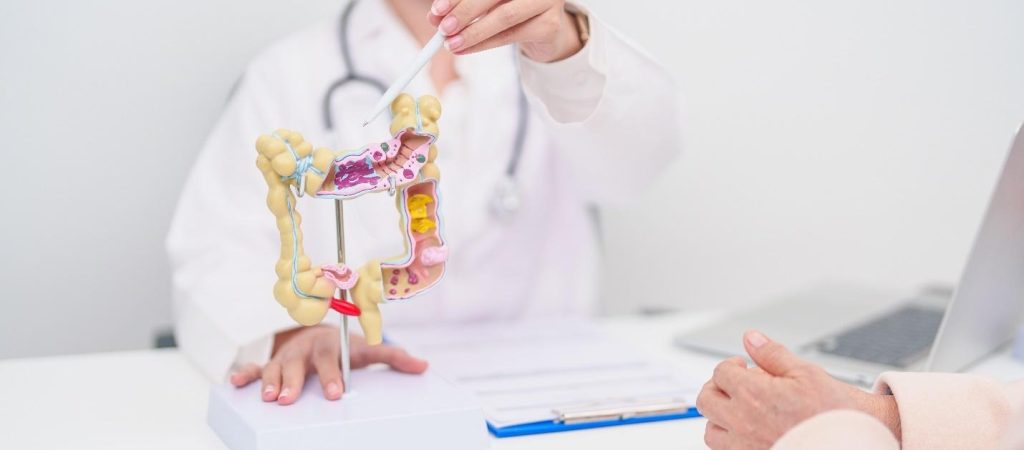
Bowel obstruction occurs when a blockage prevents intestinal contents from moving through the digestive tract.
Bowel obstruction refers to a blockage that prevents intestinal contents from passing through the small intestine or large intestine.
Under normal circumstances, the intestines move food and waste forward through coordinated muscle contractions known as peristalsis. When an obstruction develops, this movement becomes ineffective because the intestinal contents cannot pass the blocked area.
As a result, bowel obstruction may occur in:
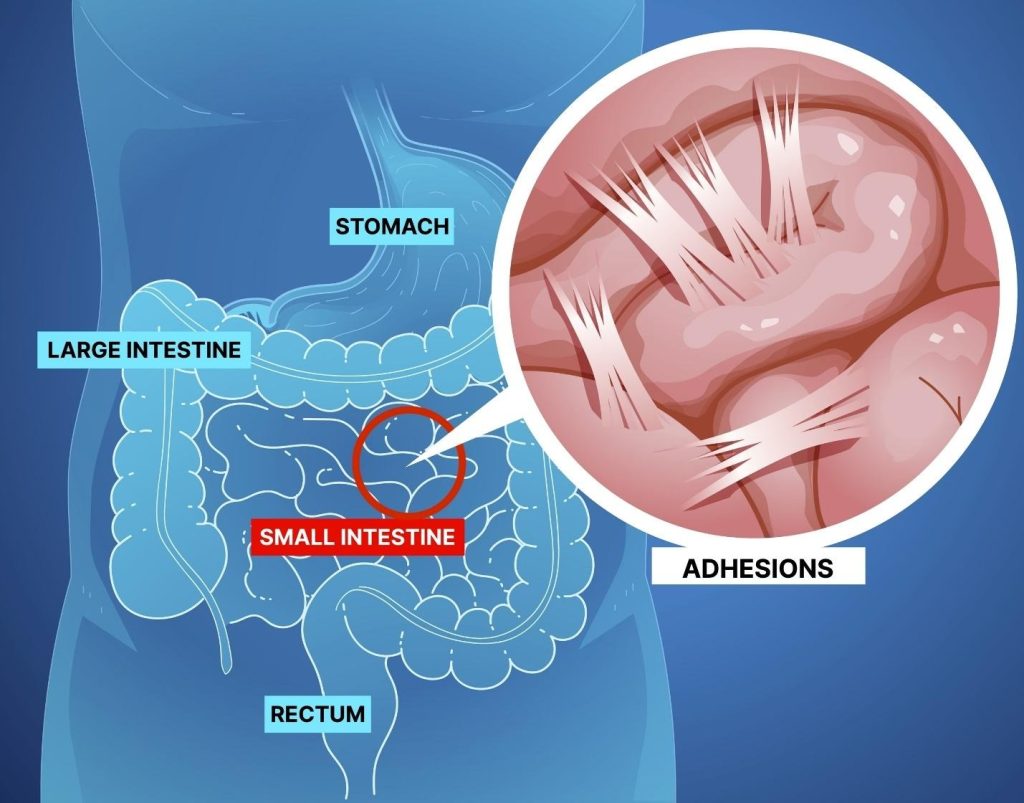
Small intestine obstruction – often caused by adhesions or hernias
Large intestine (colon) obstruction – commonly associated with tumours or severe stool impaction
The obstruction may be:
Partial – some intestinal contents can still pass through
Complete – nothing can pass through the blocked segment, which requires urgent medical attention
What causes bowel obstruction?
Several conditions may block the intestines, including scar tissue, tumours or twisting of the bowel.
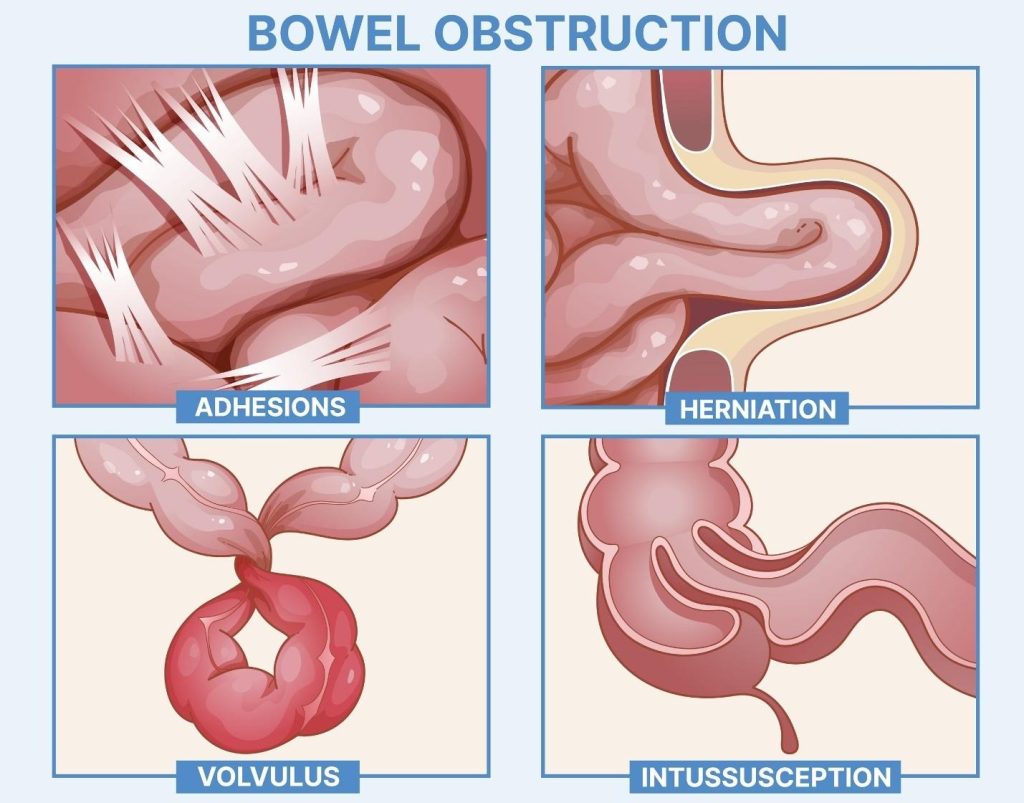
The obstruction occurs when something physically blocks the intestine or when the bowel muscles stop moving normally. Some of the common causes include:
Adhesions (scar tissue) – these are bands of scar tissue that may form after abdominal or pelvic surgery. These bands can pull on or compress sections of the intestine, narrowing the bowel and causing obstruction. Adhesions are one of the most common causes of small bowel obstruction in adults.
Hernias – a hernia occurs when part of the intestine protrudes through a weakened area of the abdominal wall. If the bowel becomes trapped within the hernia opening, the passage of intestinal contents may become blocked.
Tumours – growths within the intestine can gradually narrow the bowel lumen. Advanced tumours, including colorectal cancer, may eventually block the intestine completely.
Intestinal twisting (Volvulus) – a volvulus occurs when a segment of intestine twists around itself. This twisting can obstruct the bowel and may also cut off the blood supply to the affected segment.
Intussusception – intussusception occurs when one section of intestine slides into another segment, similar to a telescope collapsing inward. Although more common in children, it can occasionally occur in adults.
Severe stool impaction – large, hardened stool may accumulate in the colon and block the passage of bowel contents. This is more likely in individuals with severe or chronic constipation.
Intestinal inflammation or narrowing – conditions such as Crohn's disease may cause scarring or narrowing of the intestine over time, increasing the risk of obstruction.
Paralytic ileus – in paralytic ileus, the intestines temporarily stop moving due to impaired nerve or muscle activity. This can occur after surgery, severe infection, electrolyte imbalance or certain medications.
What are the symptoms of bowel obstruction?
Symptoms may vary depending on whether the obstruction is partial or complete, including:
Certain medical conditions and previous surgeries can increase the likelihood of bowel obstruction.
Several factors increase the likelihood of developing bowel obstruction, such as:
Older age – older adults may have a higher risk due to slower bowel movement, underlying medical conditions or previous abdominal surgery.
Abdominal hernias – individuals with untreated hernias may develop obstruction if the intestine becomes trapped within the hernia defect.
Colorectal tumours – tumours involving the colon or rectum may gradually narrow the bowel lumen and block the passage of stool.
Inflammatory bowel disease – conditions such as Crohn's disease may cause scarring and narrowing of the intestines.
Chronic constipation – repeated stool accumulation may lead to large, hardened stool masses that obstruct the colon.
Previous abdominal or pelvic surgery – surgery can lead to the formation of adhesions, which may develop months or years after the procedure and narrow sections of the bowel.
When is bowel obstruction a medical emergency?
Bowel obstruction can become life-threatening if the blood supply to the intestine is compromised or if the bowel wall ruptures.
Urgent medical attention is recommended if symptoms include:
Severe abdominal pain
Persistent vomiting
Inability to pass gas or stool
Fever
Rapid abdominal swelling
Signs of dehydration
How is bowel obstruction diagnosed in Singapore?
Doctors use imaging tests such as CT scans and X-rays to confirm bowel obstruction and identify the location of the blockage.
Dr Aaron Poh commonly diagnoses intestinal obstruction through a combination of clinical evaluation and imaging tests. The diagnostic methods may include:
Physical examination – our doctor may check for abdominal swelling, tenderness or abnormal bowel sounds to understand the severity of the condition.
Imaging tests – imaging studies help confirm the presence and location of obstruction. It may involve:
Abdominal X-ray – may show enlarged bowel loops and trapped gas
Computed Tomography (CT) scan – commonly used to identify the exact location and cause of the obstruction
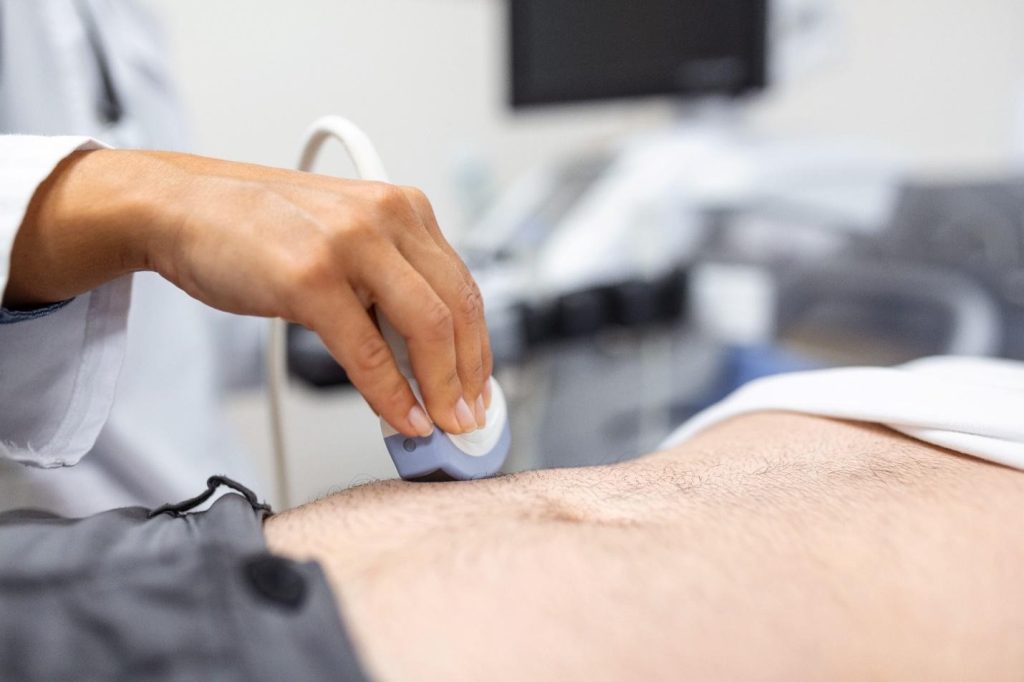
Ultrasound – sometimes used in certain cases to have a clearer view of the bowel structure
How is bowel obstruction treated in Singapore?
Treatment depends on the cause, severity and location of the obstruction.
Hospital monitoring and supportive care – patients are often admitted to the hospital for monitoring. Initial management may include:
Intravenous fluids to prevent dehydration
Nasogastric tube insertion to relieve pressure and vomiting
Temporary restriction of oral food intake
Non-surgical management – some partial obstructions caused by adhesions may resolve with conservative treatment and observation.
Surgical treatment – surgery may be required when:
The obstruction does not resolve
There is a complete blockage
The bowel blood supply is compromised
Tumours or hernias are responsible for the obstruction
How a Colorectal Specialist can help
A colorectal specialist can assess symptoms, perform appropriate investigations and recommend treatment for suspected bowel obstruction.
Persistent abdominal pain, vomiting, abdominal swelling or difficulty passing stool and gas should not be ignored.
A colorectal specialist can perform a detailed evaluation to determine whether symptoms are caused by intestinal obstruction or another gastrointestinal condition. Early assessment is important because untreated obstruction may lead to complications such as bowel perforation or infection.
If you are experiencing symptoms, seeking medical attention early allows timely diagnosis and appropriate treatment. Scheduling a consultation with a specialist can help identify the underlying cause and prevent symptoms from worsening.
Frequently Asked Questions
What is the most common cause of bowel obstruction?
In adults, adhesions from previous abdominal surgery are one of the most common causes of small bowel obstruction. In large bowel obstruction, tumours such as Colorectal cancer are a frequent cause.
What does bowel obstruction pain feel like?
Pain is commonly described as cramping or wave-like abdominal pain. The discomfort may come and go as the intestines attempt to push contents past the blocked area. As pressure builds within the intestine, the pain may become more intense and persistent.
Can bowel obstruction resolve on its own?
Some partial obstructions, especially those caused by adhesions, may improve with conservative treatment such as bowel rest and medical observation. However, complete bowel obstruction usually requires urgent medical treatment and surgery may sometimes be necessary.
Can constipation cause bowel obstruction?
Yes, severe constipation may lead to stool impaction, where hardened stool accumulates in the colon and blocks the normal passage of stool. This is more likely to occur in individuals with chronic constipation or reduced bowel movement.
How long can bowel obstruction last?
Symptoms may develop over several hours or over a few days, depending on the cause and severity of the obstruction. If symptoms persist or worsen, medical evaluation is important to determine whether treatment is required.
What happens if bowel obstruction is left untreated?
Some of the possible complications include:
-- Sepsis – widespread infection in severe cases -- Bowel perforation – rupture of the intestinal wall -- Ischaemia – loss of blood supply to the bowel -- Severe infection – abdominal infection if contents leak
Can bowel obstruction happen without surgery?
Yes, while previous surgery increases the risk of adhesions, bowel obstruction can also occur due to hernias, tumours, twisting of the bowel (volvulus) or severe stool impaction.