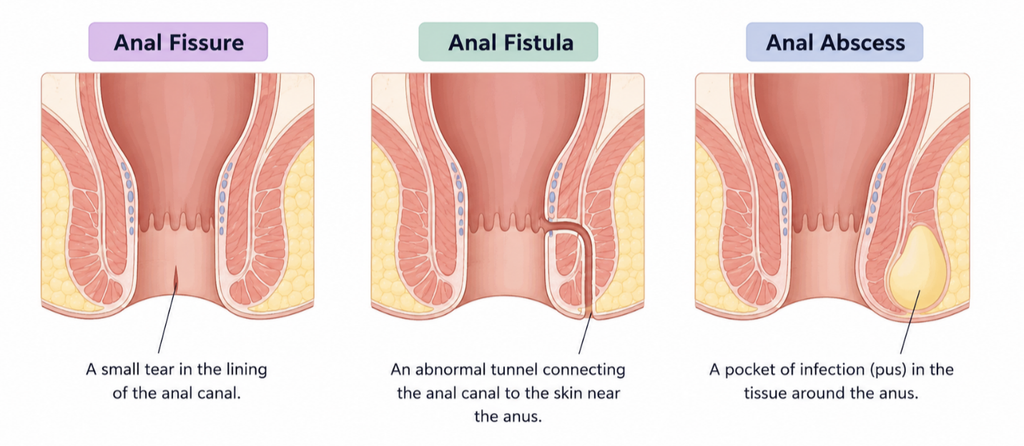
Anal fissures, fistulas and abscesses can all cause pain or discomfort around the anus, which can make them difficult to tell apart. However, they are different conditions:
Although some symptoms overlap, differences in the pattern of pain, bleeding, swelling and discharge can provide useful clues. Understanding these differences can help you recognise when anal symptoms should be medically assessed rather than assuming they are simply piles.
The simplest way to distinguish these conditions is to understand what is happening beneath the symptoms:
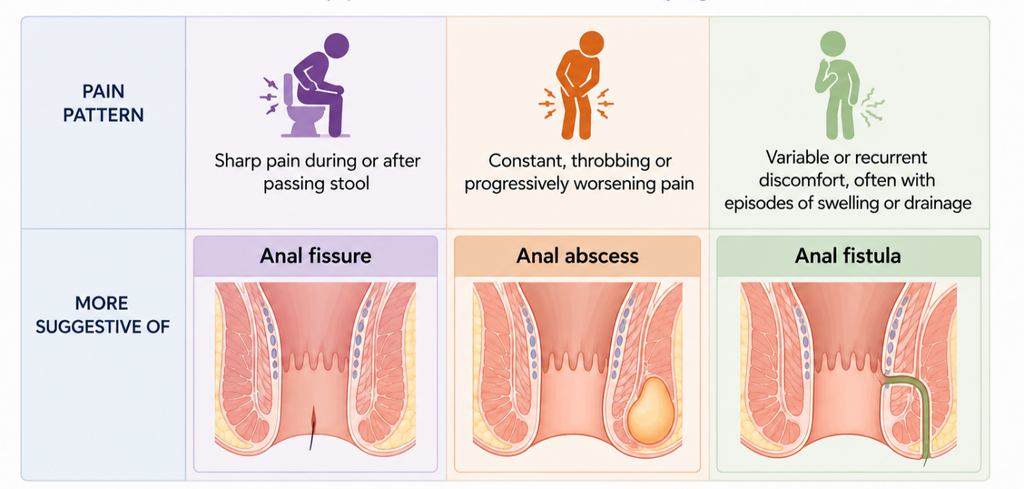
| CONDITION | WHAT IS IT? | COMMON CLUE |
| Anal fissure | A small tear or split in the lining of the anus | Sharp pain during or after a bowel movement, often with bright-red bleeding |
| Anal fistula | An abnormal tunnel between the anal canal and the skin near the anus | Recurrent discharge, irritation or a small opening in the skin |
| Anal abscess | A collection of pus caused by an infection near the anus or rectum | Constant, throbbing pain with swelling and tenderness |
Acute anal fissures usually appear as a longitudinal tear in the anal lining, while chronic fissures can develop changes such as a small skin tag or enlarged tissue around the affected area.
Anal fistulas commonly develop following an anal abscess, when a tract remains between the anal canal and the surrounding skin after the abscess drains. Other causes are also possible.
Anal abscesses commonly occur when an anal gland becomes blocked and infected, allowing pus to accumulate in the surrounding tissue.
What you can see or feel around the anus can provide another useful clue.
An uncomplicated anal fissure usually does not cause a prominent lump. However, a chronic fissure can develop a small skin tag at the outer edge of the tear, which can sometimes be mistaken for a haemorrhoid.
An anal abscess is more likely to cause a tender, swollen area. A superficial abscess can make the skin appear red, warm or visibly swollen, with increasing tenderness as the collection enlarges. Deeper abscesses, however, can cause significant pain or pressure without producing an obvious external lump.
An anal fistula can appear as a small opening, indentation or raised area in the skin near the anus. If the external opening becomes blocked, the area can become swollen and tender before reducing in size again once it drains.

The type of bleeding or discharge can provide useful clues.
An anal fissure commonly causes a small amount of bright-red blood during or after a bowel movement, often alongside sharp pain.
An anal fistula is more commonly associated with recurrent discharge from an opening near the anus. This can contain pus or blood and can stop and return over time.
An anal abscess can release pus if it drains. Although this can relieve pain and pressure, it does not necessarily mean the infection has fully resolved.
| SYMPTOM | FISSURE | FISTULA | ABSCESS |
| Bright-red bleeding | Common | Possible | Less typical |
| Pain during bowel movements | Characteristic | Variable | Possible, but pain is usually more constant |
| Pus or discharge | Not typical | Common | Can occur if it drains |
| Recurrent discharge | Not typical | Characteristic | Can occur after spontaneous drainage |
| Swelling | Usually absent | Can develop intermittently | Common |
An anal abscess can develop when an anal gland becomes blocked and infected, causing pus to collect in the surrounding tissue. If the abscess drains, either naturally or after treatment, the pain and pressure can improve.
However, a tract can sometimes remain between the anal canal and the skin. This tract is an anal fistula.
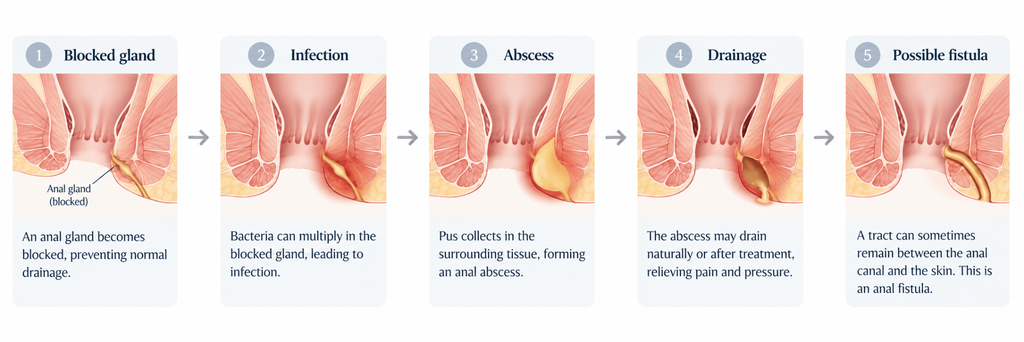
Not every abscess develops into a fistula. Less commonly, fistulas can also be associated with underlying conditions such as Crohn’s disease, particularly when they are recurrent or complex.
An anal fissure develops differently. It is a tear in the anal lining and does not typically progress into an abscess or fistula.
Of the three, an anal abscess generally requires the most urgent treatment because it involves an active infection and collection of pus. Prompt drainage is usually needed to prevent the infection from worsening or spreading.
An anal fissure is generally less urgent and often improves with conservative treatment. An anal fistula is usually not an emergency, but it is a persistent condition that requires colorectal assessment and often procedural or surgical treatment.
Rather than simply ranking these conditions by severity, the key concern is whether an active infection is present and whether symptoms are worsening or recurring.
Not every episode of anal discomfort requires urgent treatment, but persistent or worsening symptoms should be assessed.
Arrange a medical assessment if you experience:
Seek prompt medical attention if severe anal pain or swelling is accompanied by fever, chills or feeling generally unwell, as these symptoms can indicate an anorectal infection.
Persistent or unexplained rectal bleeding should also be assessed rather than assumed to be caused by piles or an anal fissure.
Treatment depends on the underlying condition, its severity and how long symptoms have been present.
| FACTOR | ANAL FISSURE | ANAL FISTULA | ANAL ABSCESS |
| Diagnosis | Usually diagnosed through examination of the anal area | Examination; imaging such as MRI can be needed for complex or recurrent fistulas | Usually diagnosed through clinical examination; imaging can be needed for deeper or unclear abscesses |
| Typical treatment | Stool regulation and medical treatment first; procedures can be considered for persistent or chronic fissures | Usually requires a procedure or surgery to treat the fistula tract | Prompt drainage is generally the main treatment |
| Urgency | Usually non-urgent unless symptoms suggest another problem | Requires specialist assessment but is not always an emergency | More urgent because an active infection is present |
The appropriate treatment will depend on the findings during assessment. For fistulas in particular, treatment planning also depends on the location and complexity of the tract and its relationship to the anal sphincter muscles.
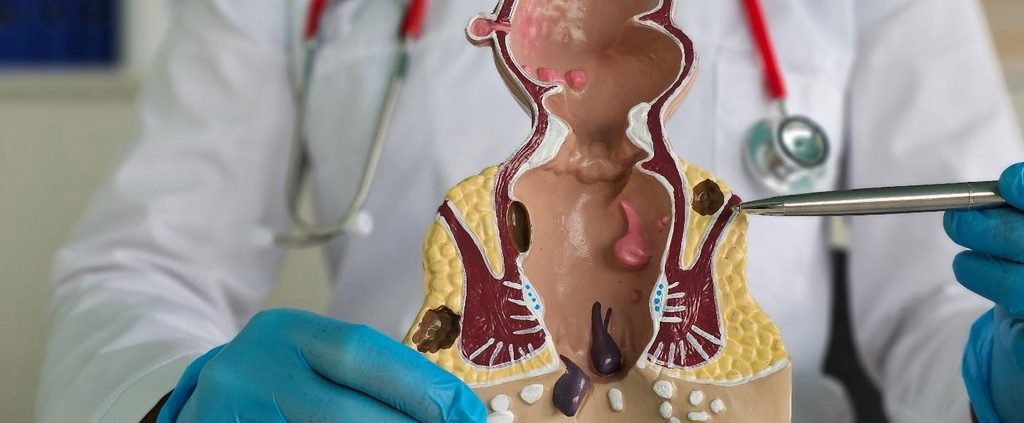
Anal pain, bleeding, swelling and discharge can have several possible causes, and symptoms alone do not always make it clear which condition is responsible.
If your symptoms persist, recur or worsen, a medical assessment can help identify the underlying cause and determine whether treatment is needed.
Book an appointment with Dr Aaron Poh for an assessment of persistent or recurring anal symptoms and to discuss the appropriate treatment options for your condition.
Many acute anal fissures heal within several weeks, particularly when constipation, straining and other contributing factors are addressed. Fissures that persist or repeatedly reopen can become chronic and require medical treatment.
An anal abscess should not be assumed to have resolved simply because the pain or swelling improves. Even if it drains spontaneously, infection can persist or a fistula can develop. Medical assessment is therefore recommended.
If an anal abscess bursts, pus can drain and the pain or swelling can temporarily improve. However, this does not necessarily mean the infection has cleared. Continued pain, swelling, discharge or fever should be assessed.
Yes. Drainage can stop temporarily if the external opening closes while the underlying fistula tract remains. This can lead to recurrent swelling, pain or discharge.
An anal fistula can persist for months or longer if the tract does not heal. Symptoms can come and go, particularly when the external opening intermittently drains.
Yes. Passing hard or large stools and straining during bowel movements can cause or contribute to an anal fissure. Repeated trauma to the area can also interfere with healing.
Yes. Although bright-red bleeding is common, some people experience little or no noticeable bleeding. Sharp pain during or after a bowel movement can instead be the main symptom.
Yes. Deeper abscesses can cause significant anal or rectal pain without visible swelling. Persistent or worsening pain, particularly with fever or feeling unwell, should be assessed even when there is no obvious lump.


Copyright © Alpine Surgical Practice | Terms & Conditions


