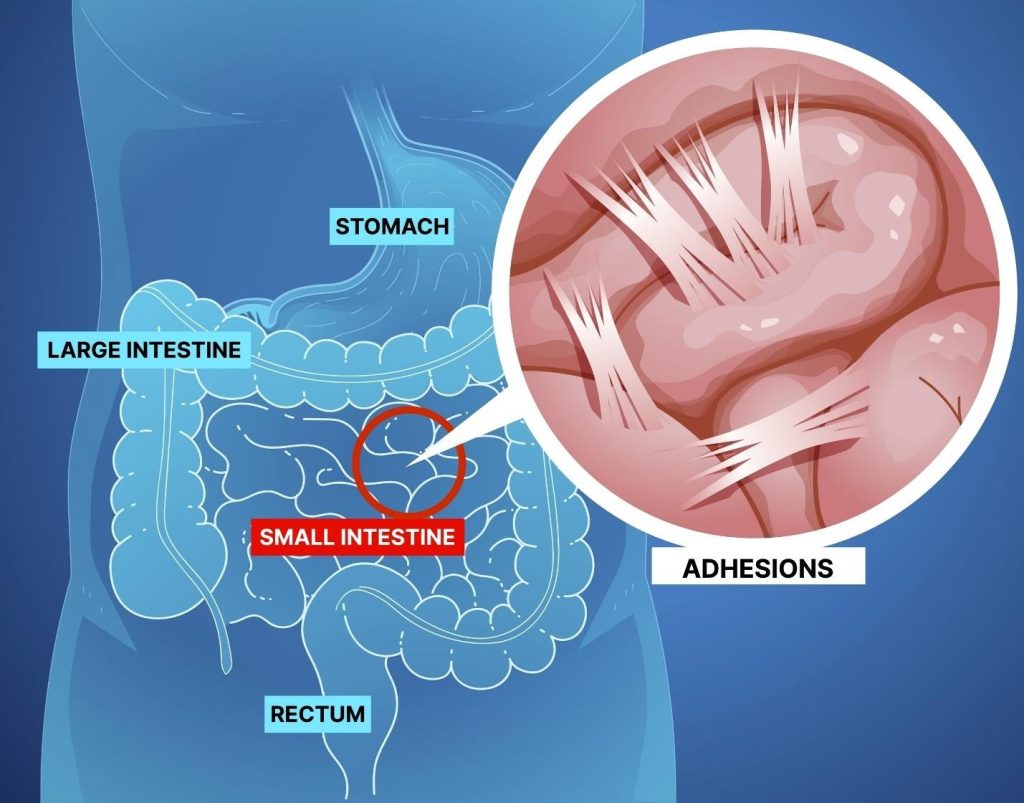
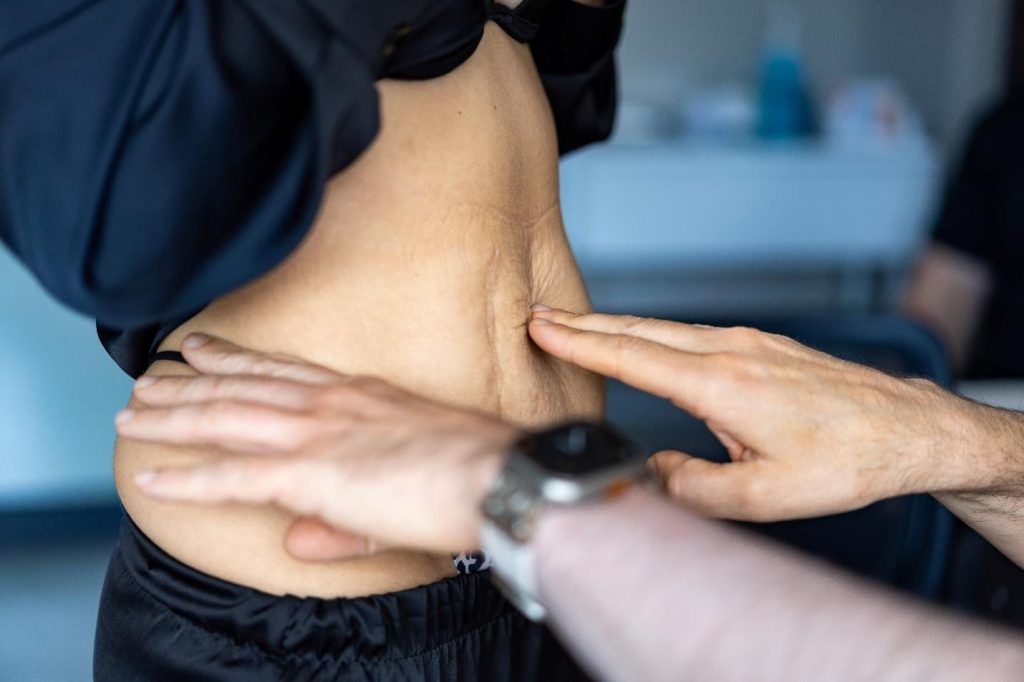
Adhesions are bands of scar tissue that can form between organs and tissues inside the abdomen.
Inside the abdomen, organs normally move smoothly against one another during digestion. However, after abdominal surgery, infection or inflammation, bands of scar tissue may form between tissues and organs that are normally separate. These bands are known as abdominal adhesions.
Adhesions develop as part of the body’s natural healing response and may connect loops of the intestines, the abdominal wall or other abdominal organs. While many people experience no symptoms, adhesions can sometimes restrict the normal movement of the intestines, leading to abdominal discomfort, digestive symptoms or complications such as bowel obstruction.
Because symptoms can vary, medical evaluation may be important in individuals with persistent abdominal symptoms, particularly those with a history of abdominal surgery.
How do adhesions happen?
Adhesions form when the body’s healing process creates scar tissue that connects nearby abdominal surfaces.
Adhesions form when the tissues inside the abdomen become inflamed or injured. During healing, scar tissue may develop and connect nearby surfaces.
Several situations that may trigger this process include:
Inflammation of abdominal tissues – when the lining of the abdominal cavity becomes inflamed, it produces fluid and healing proteins that help repair damaged tissue. During this process, nearby surfaces may temporarily stick together. If scar tissue develops before the tissues separate again, a permanent adhesion may form.
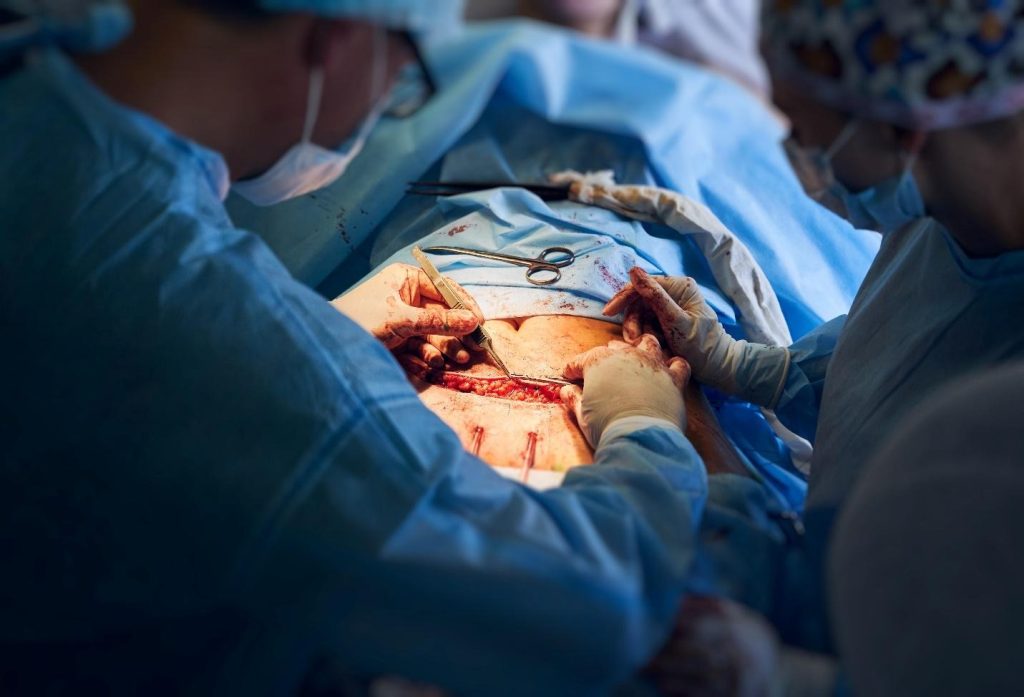
Tissue injury during surgery – during abdominal operations, internal tissues are handled, exposed to air and occasionally subjected to small amounts of trauma. While these effects are usually unavoidable during surgery, they may trigger the body’s healing response and lead to scar tissue formation between adjacent structures.
Infection within the abdominal cavity – infections can irritate and inflame the tissues surrounding abdominal organs. As the body clears the infection, healing processes may result in scar tissue connecting nearby surfaces.
Bleeding or fluid within the abdomen – blood or inflammatory fluid inside the abdominal cavity may act as a temporary adhesive between organs. As healing occurs, fibrous tissue may form in these areas, resulting in adhesions.
What are the symptoms of adhesions?
A large number of people with abdominal adhesions remain symptom-free. In others, adhesions may affect the way the intestines move, leading to digestive symptoms.
When adhesions restrict the movement of the intestines more severely, symptoms may resemble those of bowel obstruction, which requires immediate medical attention.
This includes:
Severe abdominal pain
Vomiting
Abdominal swelling
Difficulty passing stool or gas
Who is at risk of developing adhesions?
Prior abdominal surgery and inflammatory conditions increase the likelihood of adhesion formation.
Although adhesions can occur in anyone, certain factors increase the likelihood of their development, such as:
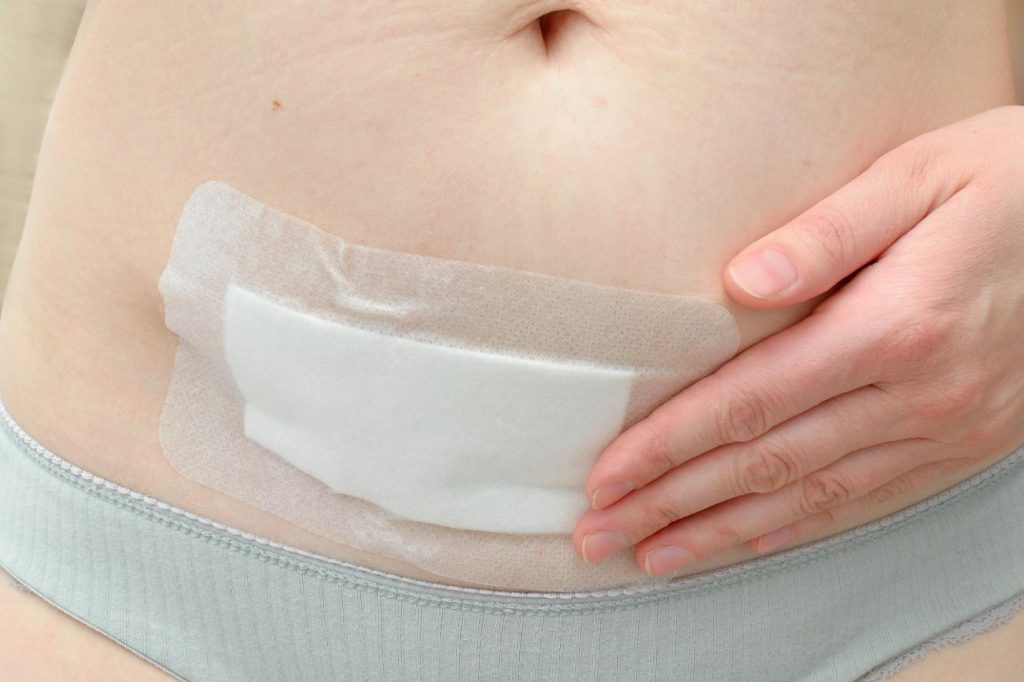
Previous abdominal or pelvic surgery – individuals who have undergone abdominal surgery are more likely to develop adhesions because surgical manipulation of tissues stimulates the healing response that produces scar tissue.
Multiple abdominal procedures – the likelihood of adhesions increases when the abdomen has been operated on more than once. Repeated tissue handling and healing cycles may result in additional scar tissue formation.
Inflammatory abdominal conditions – conditions such as diverticulitis or appendicitis cause significant irritation of the abdominal lining. Repeated or severe inflammation increases the chances of scar tissue developing between nearby tissues.
Abdominal infections – infections within the abdominal cavity may trigger prolonged inflammation, which increases the likelihood that scar tissue will form during the healing process.
Radiation therapy to the abdomen – radiation treatment can damage delicate tissues and blood vessels inside the abdomen. As the body repairs this damage, scar tissue may form and contribute to adhesion development.
What are the possible complications?
Many adhesions remain harmless. However, complications may occur if scar tissue interferes with the normal movement of the intestines.
This may include, but is not limited to:
Bowel obstruction – scar tissue may pull or kink sections of the intestine, preventing normal movement of food and stool.
Chronic abdominal pain – adhesions may restrict the natural movement of abdominal organs, sometimes leading to persistent discomfort.
Difficulty with future surgeries – adhesions can make subsequent abdominal operations more technically challenging because organs may be attached to surrounding tissues.
How are abdominal adhesions diagnosed in Singapore?
Diagnosis involves evaluating symptoms and using imaging tests to assess possible bowel obstruction.
Diagnosing abdominal adhesions can be complex because the scar tissue itself is often too thin to be clearly seen on most imaging tests. Instead, diagnosis usually focuses on identifying patterns of symptoms and detecting complications, particularly bowel obstruction or restricted intestinal movement.
Dr Aaron Poh may use the following diagnostic methods:
Medical history – Dr Aaron Poh may review your medical history to identify factors that increase the likelihood of adhesions, such as previous abdominal surgery, infections or inflammatory conditions. Understanding the timeline of symptoms and past procedures helps determine whether scar tissue may be affecting intestinal movement.
Physical examination – examination of the abdomen allows our doctor to assess for tenderness, swelling or areas of discomfort. The abdomen may also be checked for signs of distension, abnormal bowel sounds or other findings that could suggest bowel obstruction.
Imaging studies – tests such as Computed Tomography (CT) scans or abdominal X-rays are commonly used to evaluate the intestines. Although adhesions themselves may not always be visible, these imaging tests can detect indirect signs such as dilated bowel loops, trapped gas or fluid levels that suggest an obstruction caused by scar tissue.
In certain situations, adhesions may only be definitively confirmed during surgical evaluation, particularly if an operation is performed to relieve bowel obstruction or persistent symptoms.
How are adhesions treated in Singapore?
Treatment depends largely on whether adhesions are causing symptoms or complications.
Observation and symptom management – when adhesions do not cause significant symptoms, active treatment may not be necessary. In such cases, our doctor may recommend monitoring symptoms and managing discomfort conservatively. This approach avoids unnecessary surgery, since additional operations can sometimes lead to new adhesions forming.
Medical care for bowel obstruction – if adhesions cause bowel obstruction, hospital treatment may be required. Patients may receive intravenous fluids, bowel rest and close monitoring while the intestine decompresses. In some cases, a tube may be inserted through the nose into the stomach to relieve pressure and reduce vomiting while the blockage is assessed.
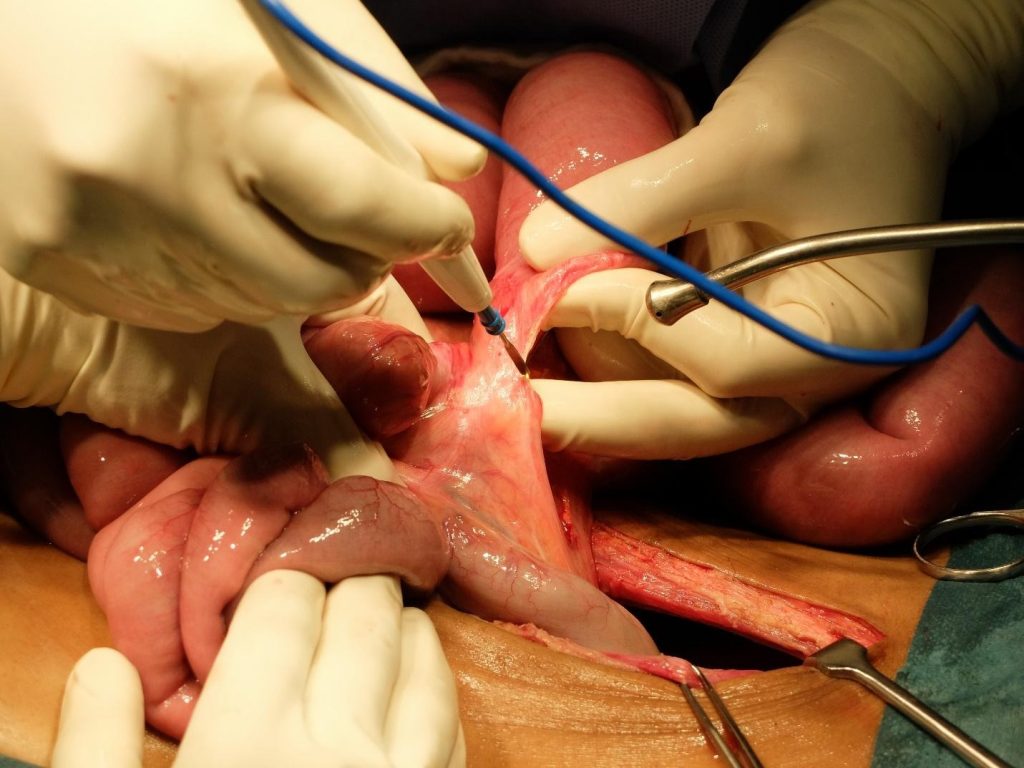
Surgical adhesiolysis – when symptoms are severe, persistent or associated with repeated bowel obstruction, surgery may be recommended. During adhesiolysis, the surgeon carefully identifies and separates the bands of scar tissue that are restricting the intestines. This procedure restores the normal movement of the bowel and relieves the obstruction. In suitable cases, minimally invasive techniques such as laparoscopic surgery may be used to reduce recovery time.
How a Colorectal Specialist can help
A colorectal specialist can evaluate abdominal symptoms and determine whether adhesions are contributing to bowel problems.
Abdominal symptoms can arise from many different conditions and it is not always immediately clear whether adhesions are involved.
A colorectal specialist can review your medical history, particularly any previous abdominal surgery or inflammatory conditions and evaluate current symptoms. If necessary, imaging tests may be arranged to assess the intestines and determine whether adhesions are affecting bowel function.
Persistent abdominal discomfort, unexplained digestive symptoms or recurrent bowel problems should not be ignored. Scheduling a consultation allows a colorectal specialist to assess your symptoms, review your medical history and determine whether abdominal adhesions or another condition may be responsible.
Frequently Asked Questions
Are abdominal adhesions dangerous?
Most adhesions are harmless and never cause symptoms. Complications may occur if scar tissue restricts the movement of the intestines, which can sometimes lead to bowel obstruction.
Do abdominal adhesions always cause symptoms?
No, many people with adhesions never experience symptoms and may only discover them incidentally during imaging or surgery.
Can abdominal adhesions cause bloating?
Yes, adhesions may sometimes restrict the normal movement of the intestines, which can slow the passage of gas and stool. This may lead to symptoms such as abdominal bloating, fullness or intermittent cramping discomfort.
Can abdominal adhesions cause bowel obstruction?
Yes, adhesions are one of the most common causes of small bowel obstruction, particularly in individuals who have previously undergone abdominal surgery.
What does pain from abdominal adhesions feel like?
Pain related to adhesions may be intermittent or cramp-like and is sometimes associated with bloating or changes in bowel habits. Symptoms may worsen when the intestines become temporarily restricted by scar tissue.
Can abdominal adhesions be seen on CT scans?
Adhesions themselves are often too thin to be directly seen on CT scans. However, imaging tests can identify indirect signs such as bowel obstruction or abnormal intestinal positioning that may suggest the presence of adhesions.
Do adhesions go away on their own?
Once formed, adhesions usually do not disappear on their own. However, many remain harmless and do not require treatment unless they cause symptoms or complications.
When should adhesions be suspected?
Adhesions may be considered when individuals experience: -- Persistent digestive symptoms following abdominal infections or inflammation -- Recurrent abdominal pain after previous abdominal surgery -- Intermittent bloating or digestive discomfort without a clear cause -- Episodes of bowel obstruction symptoms, such as vomiting or abdominal swelling
Can adhesions be prevented?
While it may not always be possible to prevent adhesions completely, surgeons often use careful surgical techniques and minimally invasive procedures to reduce the risk of scar tissue formation.
Can exercise or diet help abdominal adhesions?
Lifestyle changes cannot remove adhesions, but maintaining regular bowel habits through a balanced diet, hydration and physical activity may help reduce symptoms related to digestive slowing.
Can adhesions come back after surgery?
Yes, although surgery can remove existing adhesions, the healing process may occasionally lead to new scar tissue forming. For this reason, surgical treatment is usually recommended only when adhesions are causing significant symptoms or complications such as bowel obstruction.
Can adhesions develop years after surgery?
Yes, adhesions typically form during the healing process after surgery, but they may cause symptoms many years later.
How common are abdominal adhesions after surgery?
Adhesions are relatively common after abdominal or pelvic surgery. Studies suggest that a significant proportion of individuals who undergo abdominal operations may develop some degree of internal scar tissue during the healing process. However, many adhesions remain mild and never cause symptoms.