Lipoma removal
Lipomas are non-cancerous fatty lumps that form under the skin, and often feel soft and mobile. Although they are harmless, they can be unsightly and uncomfortable. Thankfully, they can be effectively excised via a simple removal procedure.
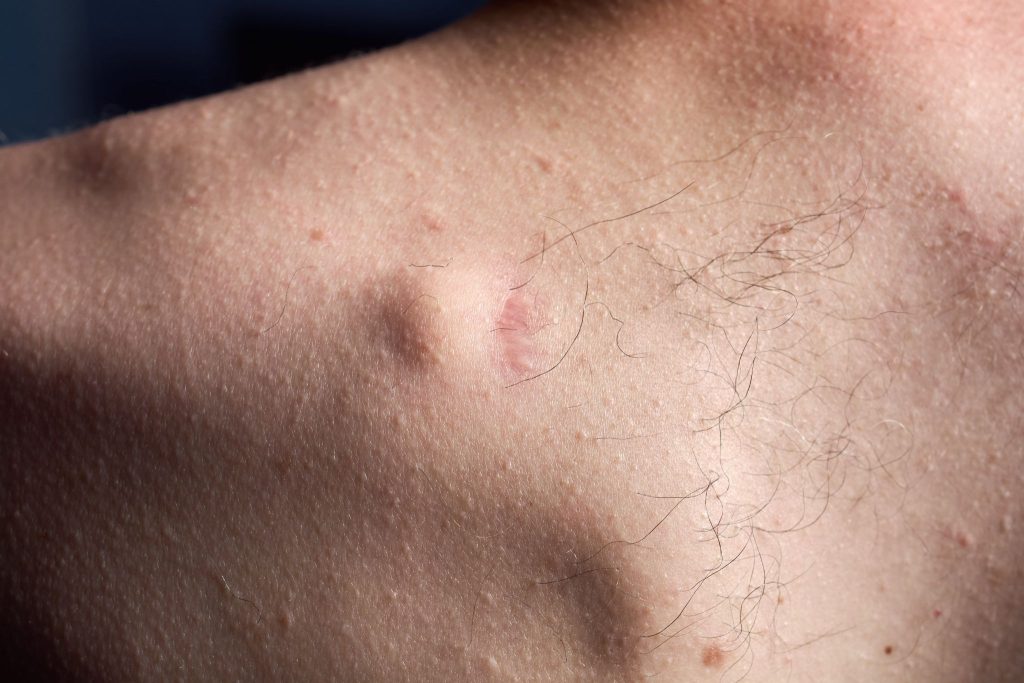
Lipomas are non-cancerous fatty lumps that form under the skin, and often feel soft and mobile. Although they are harmless, they can be unsightly and uncomfortable. Thankfully, they can be effectively excised via a simple removal procedure.
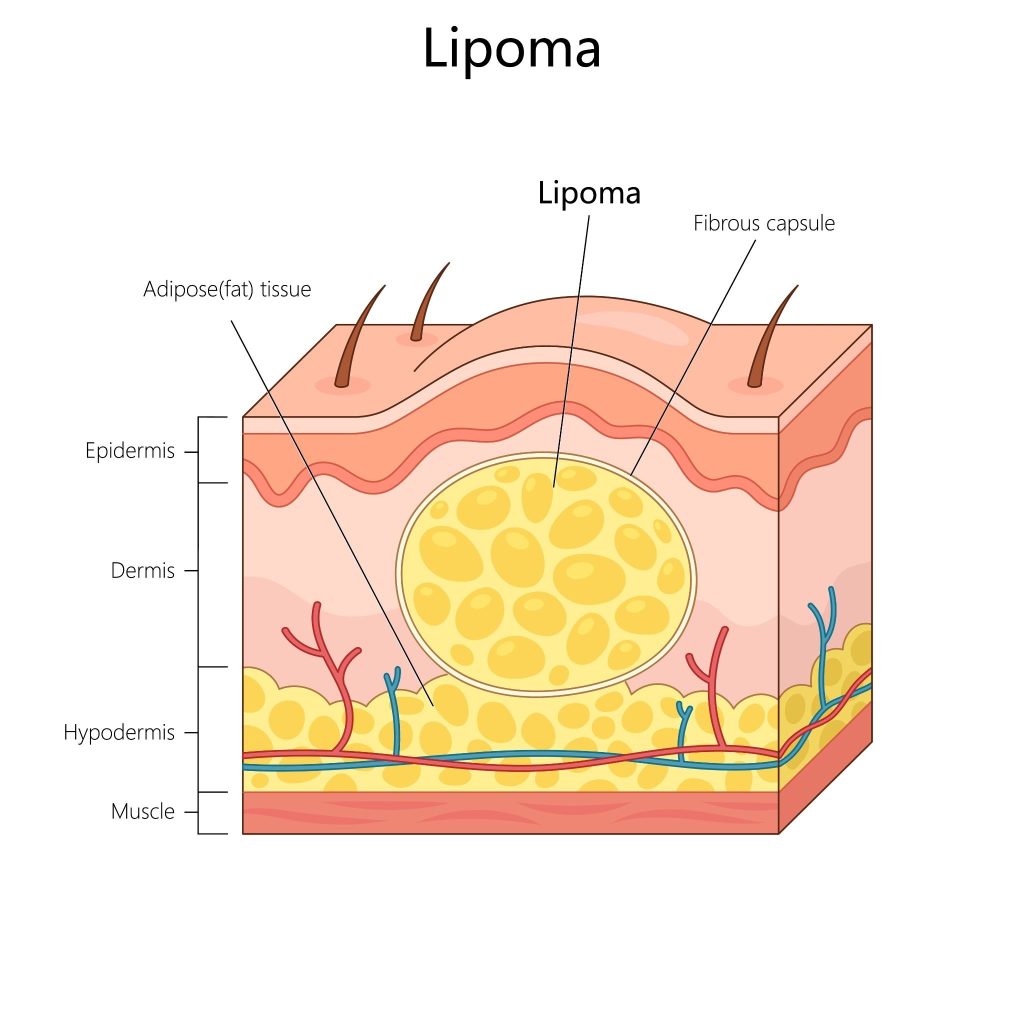
Lipomas are benign growths of fatty tissues, encased in a membrane of fibrous tissue [1]. Lipomas are often found in the subcutaneous tissue, but may also be found elsewhere such as in the internal organs [2]. Common areas where lipomas are found include:
Normal lipomas typically only contain fat tissues. A common subtype is an Angiolipoma which contains a greater density of blood vessels and fat tissue [1].
Although lipomas are common benign growths, not much is known about the exact cause of formation. Other than a few rare genetic diseases, there are no known dietary or lifestyle factors associated with the development of lipomas. common risk factors associated with lipoma growth include [2]:
Lipomas are harmless and do not necessarily require treatment or removal. Removal is only indicated if the growth gets too big and causes pain or nerve compression, or is cosmetically bothersome. Large growths also have a slightly higher chance of harbouring malignancy.
Most lipomas are benign and not a cause for concern. However, they warrant medical attention if you experience the following:
Liposarcomas are rare and can sometimes be mistaken for lipomas. These are cancerous fatty tumours that require medical attention. If you suspect that the tissue is more than a typical lipoma, consult a doctor for proper evaluation.
Not all skin lumps are lipomas. Other benign skin lumps include epidermal/ sebaceous cysts, fibromas, neuromas, or warts, while malignant ones may include soft tissue sarcomas, and squamous or basal cell skin cancers.
Lipoma removal can be considered if the growth starts to bother you, either due to size, location, or whether it causes pain. Treatment to remove lipomas are relatively simple and safe procedures.
Most cases of lipoma removal are done by surgical excision. A surgical excision involves making a cut on the skin and removing the lipoma, followed by stitching the excision wound. Excision is also commonly done as it prevents recurrence or regrowth of the lipoma mass. However, surgical excision can risk leaving scars after removal and recovery.
If you decide to surgically remove a lipoma growth, it is recommended to undergo the procedure while the lesion is smaller rather than waiting for it to grow larger, as this can increase the risk of the lipoma affecting other structures such as joints, nerves, or blood vessels, which may result in the surgical procedure becoming more complicated with higher risks.
Just like any other clinical procedure, lipoma removal procedures may also present some risks, common risks associated with lipoma removal include [4]:
Before going for a lipoma removal procedure, you will need a consultation session for your doctor to assess your lipoma growth. Your lipoma removal will typically go as follows:
A consultation session is important for your doctor to evaluate your condition and plan the suitable procedure to be performed.
Before your surgery, your doctor may inform you to stop taking certain medications or to fast from the night before.
Typically, lipoma removals are done on an outpatient basis. You should be able to go home after your surgery. Before discharge, your doctor may give care instructions to take care of your surgical wound.
Lipomas generally do not require any treatment when small and asymptomatic. A lipoma removal may be recommended if the growth causes pain or discomfort. Lipoma removal is a straightforward and effective procedure, usually performed under local anaesthesia with minimal downtime. These minimally invasive procedures generally entail a quick recovery with minimal scarring.
If you, however, experience a rapidly growing lump with pain or discomfort, it is important to consult a doctor. Schedule a consultation with us today for a thorough assessment and personalised treatment plan.
Lipomas left untreated will either stay the same or slowly grow larger. If it does not concern you or cause any discomfort, leaving the growth untreated typically will not cause any problems.
Lipomas may grow back, the risk of recurrence also increases with incomplete removal of the lipid mass.
Lipomas are not cancerous, and will not turn into malignant growth. However, lipomas may resemble liposarcoma, which is a malignant tumour growth of fat cells. This is why it is recommended to get a proper diagnosis before the removal of the growth.
No, lipoma removal is generally considered a minor procedure, especially for small and superficial lipomas. The procedure is generally done under local anaesthesia and takes only 15 - 30 minutes. Larger or deeper lipomas, however, may require general anaesthesia. That being said, it is still not considered major surgery unless extensive tissue is removed or reconstruction is required.


Copyright © Alpine Surgical Practice | Terms & Conditions


